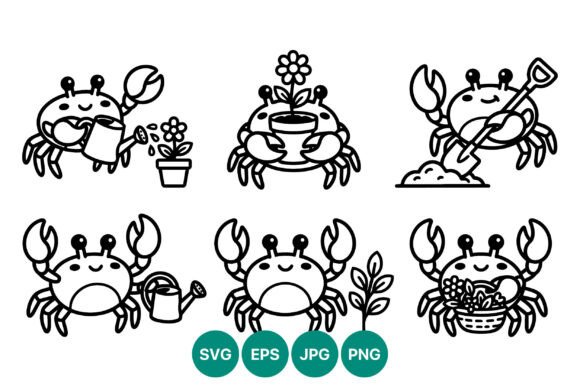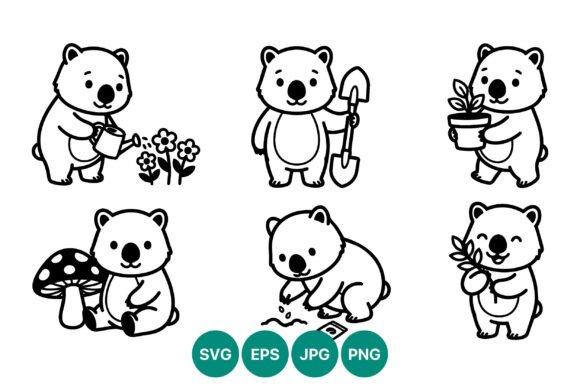
Cute Guinea Pig Gardening Line Art
A Designer’s Take on Practical Use
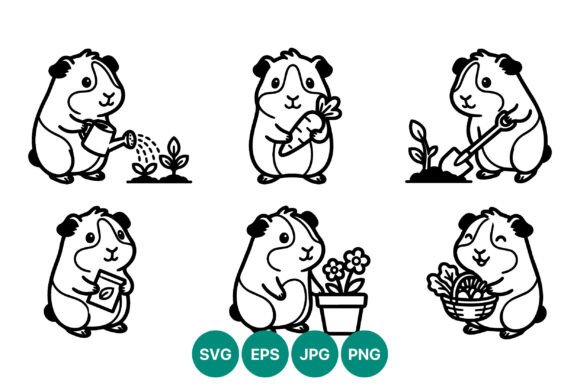
As a designer who frequently evaluates embroidery files for real-world use, I’ve had the chance to review many machine embroidery designs. Today, I’m evaluating Cute Guinea Pig Gardening Line Art, a set of six black and white line art illustrations that feature a guinea pig in various gardening activities. This design has potential, but like any digital asset, it requires careful consideration before being used in a finished project.
First Impressions: Mood and Visual Personality
The first thing that strikes me about Cute Guinea Pig Gardening Line Art is its charming, whimsical tone. The line art is clean, simple, and highly stylized, which makes it versatile for a range of applications. Each illustration captures a different moment in a guinea pig’s gardening day—watering plants, holding a carrot, digging with a shovel, and more. The simplicity of the lines allows for easy interpretation and adaptation, making it ideal for both personal and commercial projects.
The black and white format is a strong choice, especially for embroidery. It offers maximum contrast and clarity, which is essential when working with fabric that may vary in color or texture. However, it’s important to consider how the design will look once stitched, particularly on different backgrounds. A light-colored fabric might require additional thread colors to maintain visual interest, while a dark background could enhance the design’s depth and detail.
Real-World Applications: Where Does This Design Fit?
Cute Guinea Pig Gardening Line Art is well-suited for a variety of embroidery projects. For instance, I can imagine using it on a custom tote bag or a baby onesie as a playful, nature-themed decoration. It would also work beautifully on an embroidered patch, especially for a small shop or Etsy listing focused on whimsical, handmade items.
Consider a holiday gift such as a personalized pillow cover or a tea towel featuring one of the illustrations. The guinea pig’s actions are relatable and endearing, making the design appealing to a broad audience. It could even be used in a boutique setting for branding or promotional materials, adding a touch of charm to store displays or packaging.
However, it’s not just about aesthetics. When evaluating a design for practical use, I always consider how it will perform under real conditions. Will the stitching be clear? Is the layout suitable for the intended product? These questions are crucial, especially when planning a custom apparel project like a sweatshirt or cap.
Where to Use with Caution
While Cute Guinea Pig Gardening Line Art is versatile, there are situations where it might not perform as well. For example, using it on small hoop sizes could result in a loss of detail, especially in areas with intricate shapes or dense stitch patterns. Similarly, textured or stretchy fabrics may affect the design’s clarity and alignment.
Dark fabrics can also pose a challenge. While the black and white format is great for contrast, it may not provide enough visual interest on very dark backgrounds. In such cases, experimenting with thread colors or adjusting the design’s contrast through post-processing could help.
Another area to watch is the use of the design on curved surfaces like caps or hats. The line art’s flat layout may not translate well to these surfaces without additional adjustments. Likewise, dense stitch areas or detailed corners may require extra care during the embroidery process to ensure they remain sharp and clear.
Design Quality and Embroidery Performance
The quality of Cute Guinea Pig Gardening Line Art is generally good, but it’s not without its flaws. The line art is consistent across all six illustrations, which is a positive sign. However, some details may be too fine or too bold, depending on the intended use. This means that testing the design on scrap fabric before committing to a final product is essential.
Stitch density is another factor to consider. A higher stitch density can enhance the design’s definition, but it may also increase the time required for embroidery. On the other hand, a lower stitch density may result in a less detailed finish. Balancing these factors is key to achieving the desired outcome.
Using the right stabilizer is also critical. A proper stabilizer can help prevent puckering or distortion, especially on delicate or stretchy fabrics. It’s worth experimenting with different types of stabilizers to find the best fit for the specific fabric you’re working with.
Practical Tips for Using Cute Guinea Pig Gardening Line Art
If you're considering using Cute Guinea Pig Gardening Line Art for a project, here are a few practical tips to keep in mind:
- Test on scrap fabric first to assess how the design looks and performs in real conditions.
- Check thread color contrast to ensure the design stands out on the chosen fabric.
- Review stitch density and adjust if necessary to achieve the desired level of detail.
- Confirm hoop size to avoid issues with scaling or alignment.
- Inspect small details to ensure they remain clear after stitching.
- Test in black and white mockups to see how the design will look on different backgrounds.
- Compare light and dark fabric backgrounds to determine the best visual impact.
- Use proper stabilizer to prevent distortion or puckering.
- Check whether the design works for both personal and commercial projects to ensure versatility.
- Confirm licensing before selling finished items or digital products.
Final Thoughts
Cute Guinea Pig Gardening Line Art is a promising design with a lot of potential for creative and practical use. Its whimsical style and clean line art make it adaptable for a wide range of embroidery projects, from personalized gifts to small business merchandise. However, like any digital asset, it requires thoughtful evaluation and preparation before being used in a finished product.
By following the tips outlined above, you can ensure that your use of Cute Guinea Pig Gardening Line Art results in a visually appealing, professionally executed design that meets the expectations of your customers and clients. Whether you're an Etsy seller, a craft business owner, or a hobbyist, this design has the potential to add a unique and charming touch to your creations.